
The Ultimate Guide to Aluminum Coil & Flat Sheet Specifications
Introduction
Aluminum is more than just a metal in the high-stakes world of American industry and construction. It is the backbone of modern infrastructure. The grade, temper, and finish of the aluminum used will affect how smoothly a project goes, whether it’s the smooth architectural cladding of a high-rise building in Manhattan or the lightweight body panels on an electric truck in Detroit.
The aluminum market, on the other hand, has a lot of technical details. If a procurement manager mistakenly orders 3003-H14 instead of 5052-H32, it could stop a production line, make materials fail, or cost thousands of dollars in scrap waste. Not only does “Mill Finish” look different from “Brite Dip,” but it also works differently.
If you want to know about the specs for aluminum coil and flat sheet in the US market, this guide is the ideal place to start. To ensure your project goes well, first learn your metal’s “DNA,” which includes its alloy, temper, gauge, and finish. It doesn’t matter if you’re stamping parts, roll-forming gutters, or laser-cutting precision pieces; this advice is true.
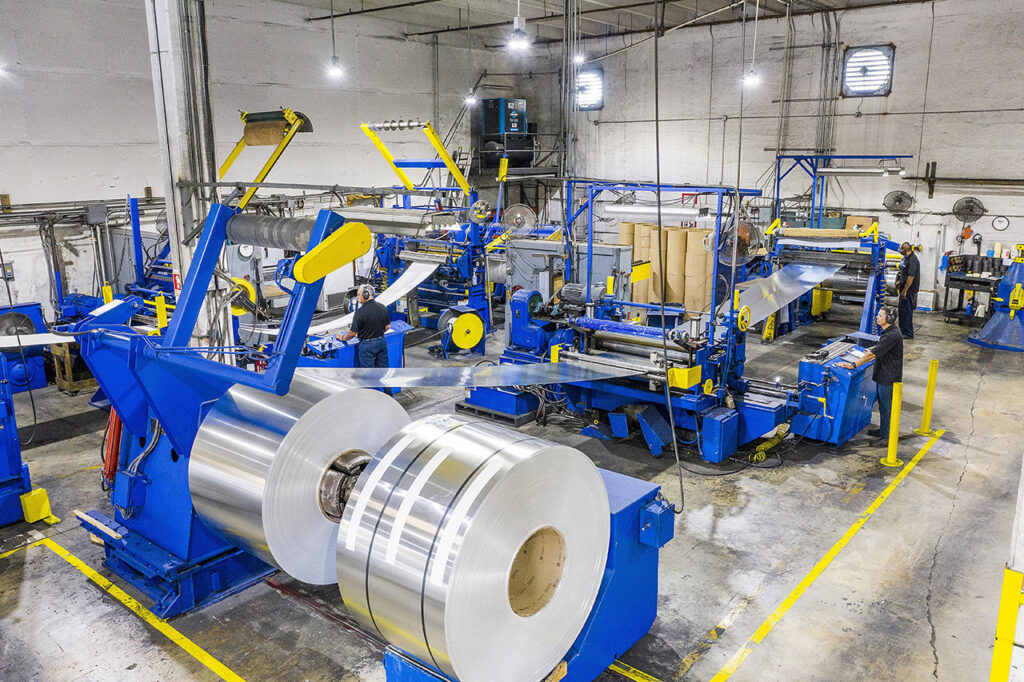
What is an aluminum coil?
A coil of aluminum is just a long strip that has been coiled up into a spiral. For high-volume manufacturing procedures like stamping, roll forming, or making gutters, aluminum coils are the best type of raw material.
The Journey of Manufacturing
A coil starts its life as an ingot that weighs up to 60,000 pounds. This ingot is heated and run through a series of rollers in a hot rolling mill, reducing its thickness dramatically. Thereafter, it is cold-rolled to get the exact gauge tolerances it needs before being coiled onto a core.
Master Coil or Slit Coil
In the US supply chain, you will usually find two types:
- Master Coils: These are the wide coils that come straight from the mill and are usually 36″, 48″, or 60″ wide. They are heavy, usually between 5,000 and 10,000 pounds, and are utilized by big distributors or toll processors.
- Coils with Slits: A slitter has chopped these master coils into strips. For instance, a company that makes window spacers would ask for coils that are exactly 0.500″ wide.
Why use a coil?
Buying aluminum in coil shape is usually cheaper per pound than buying it in flat sheets since it doesn’t need as much processing at the service center. It also cuts down on scrap waste because producers can feed the metal into their machines and cut it to the right length.
Specifications for flat metal sheets
When you unroll, flatten (level), and cut the continuous coil to the right lengths, it turns into a flat sheet or plate. In the USA, the distinction between “sheet” and “plate” is firmly specified by thickness:
- Sheet: Thickness between .006 inches and .249 inches.
- Plate: A thickness of at least 0.250 inches (1/4″).
The "Gauge" vs. "Decimal" Argument
Using “Gauge” numbers is one of the most prevalent mistakes that buyers make. The word “gauge” comes from the past and can mean different things for ferrous (steel) and non-ferrous (aluminum) metals.
For example: 16 Gauge Steel is generally 0.0598 inches thick, and 16 Gauge Aluminum is usually 0.0508 inches thick.
Best Practice: Give thickness in decimal inches (for example, .040″, .063″, .125″) to avoid confusion. This aligns with ANSI H35.2 dimensional tolerances.
Temper and Hardness
The specification of a sheet isn’t just about size; it’s about hardness, defined by the “temper” code:
- O-Temper (Annealed): Very soft. This type of material is commonly utilized in the production of deep drawn or spun bowls and cylinders.
- H-Temper (Strain Hardened): Common for non-heat-treatable alloys (3003, 5052).
- H14: Half Hard (Standard for bending and general fab).
- H32: Strain hardened and stabilized (Common for 5052).
- T-Temper (Heat Treated): For structural alloys like 6061.
- T6: Heat-treated in a solution and then aged artificially. Very tough, stiff, and strong.
Popular Flat Sheet Sizes
The trucking and construction sectors set the “standard” inventory sizes in the United States. Having these common sizes in stock makes them available faster and costs less than special “cut-to-size” purchases.
Standard Sizes (Length x Width)
- 4′ x 8′ (48″ x 96″). Fits neatly on regular pallets and wooden backing.
- 4′ x 10′ (48″ x 120″): This size is common in the trailer and sign industries because it cuts down on seams.
- 5′ x 10′ (60″ x 120″): This size is best for larger objects that need laser cutting or nesting.
- 5′ x 12′ (60″ x 144″): This size is typical in marine and architectural applications.
Common Thicknesses (Stock Inventory)
- 032″ & .040″: Lightweight applications, skins, and siding. General fabrication, toolboxes, and architectural panels are all made with
- .063″: 1/16″ nominal.
- .080″: Heavy-duty signage, such as DOT road signs.
- .125″ (1/8″): Heavy-duty brackets and structural brackets.
Different types of surface finishes
The way an aluminum sheet is finished affects how it looks and how well it can stand up to the elements.
1. Finish from the mill
This is the raw finish that comes off the rolling mill. It could be dull or sparkly and have little rolling traces on it. If the metal will be coated, disguised, or utilized for pieces that just need to work, this is the ideal choice.
2. Painted (Coil Coated)
You can paint aluminum before you shape it.
- Polyester (PE): Cheap and good for indoors or outside spaces that don’t get a lot of sun. In the US.
- PVDF (Kynar 500® / Hylar 5000®) is the ideal material for construction outside. It has excellent long-term fade and chalk resistance, often backed by 20–30 year warranties.
3. Anodized
An electrochemical procedure that makes the natural oxide layer thicker.
- Clear Anodized: A matte silver finish that is extremely hard and scratch-resistant.
- Color Anodized: Bronze, Black, or Gold. Unlike paint, the color is part of the metal, meaning it cannot peel.
4. Embossed (Diamond or Stucco)
- Stucco Embossed: Has a texture resembling that of a stone. A lot of people use it to cover up scratches and fingerprints in walk-in freezers and jacketing.
- Tread Plate (Diamond Plate): A raised diamond pattern on the floor of fire engines, ambulances, and industrial walkways that keeps people from slipping.
Aluminum Trim Coil Options
Trim coil is a very significant sort of building material for homes in the US, especially for putting up siding, roofing, and windows.
What is a coil of trim?
Trim coil is a thin piece of aluminum that comes in compact, easy-to-carry rolls (say 24 inches wide by 50 feet long). You can utilize it on the job site with a portable “brake” (bending machine). Contractors bend this coil to wrap wood fascia, window casings, and rake boards. This stops the wood from deteriorating.
The “Brake Metal” Benefit
Trim coil is created with a temper that is hard enough to preserve its shape but soft enough to be bent by hand-operated brakes without damaging the paint. It fits exactly on every house and keeps water from getting inside the building.
The Benefits of Aluminum Trim Coils
Why do so many homes now have aluminum trim coil instead of wood or vinyl?
- Maintenance-Free Living: Once wood fascia is wrapped in aluminum trim coil, it greatly reduces repainting needs. It helps protect fascia from moisture and insect damage when installed over sound wood.
- Crisp Looks: It provides your home sharp, clear lines that make it look nicer from the street. Modern trim coils are available in hundreds of colors to match major siding manufacturers (e.g., James Hardie, CertainTeed).
- On-Site Customization: There is no window that is completely square. Trim coil lets the installer make unique flashings on-site to make up for any structural problems.
- Cost-Effective Protection: Wrapping rotting wood in aluminum is a one-time cost that keeps the outside of the building looking good for longer than replacing it every ten years.
Performance and Durability
Aluminum is often selected over steel because of its unique strength-to-weight ratio and natural corrosion resistance.
Corrosion Resistance
Unlike steel, which rusts (iron oxide) and flakes away, aluminum forms a microscopic oxide layer that protects the metal underneath. If you live in a place with a lot of saltwater, like coastal Florida or icy areas where road salt is utilized, the 5xxx series alloys are best since they are more resistant to saltwater corrosion.
Strength-to- Weight Ratio:
Aluminum weighs around one-third as much as steel. This is very important for:
- Transportation: It cuts down on the amount of gasoline that trucks and trailers use.
- Building: It makes it safer and easier for workers to move big sheets, such as 4×8 panels.
Formability
The ability to form aluminum’s performance also depends on how well it bends.
- Good Formability: Depending on the radius, alloys like 3003-H14 and 5052-H32 can be bent 90 or even 180 degrees without breaking.
- Not very pliable: Structural alloys like 6061-T6 will commonly break if bent too forcefully because they are too hard or brittle.
Common Aluminum Grades and Alloys
The Aluminum Association says that aluminum alloys in the US market are grouped by a four-digit system. The first number tells you what the principal metal is that makes up the alloy.
1xxx Series: Pure Aluminum (1100)
- Composition: 99% pure aluminum.
- Properties: Very soft and easy to work with, good at conducting heat and electricity, and resistant to rust. Not strong.
- Common Uses: Electrical wires, chemical equipment, decorative trim, and heat exchangers.
3xxx Series Manganese (3003)
- Composition: It is made of aluminum and manganese.
- Properties: About 20% stronger than the 1100 series. It works well and doesn’t rust. Not able to be heat-treated. This is the alloy that is used for “General Purpose.” Used for ductwork in HVAC systems, culinary tools, garage doors, roofing, and chemical tanks.
- Common Use: This is the “General Purpose” alloy. Used for HVAC ductwork, cooking utensils, garage doors, roofing, and chemical tanks.
- Top Spec: 3003-H14 is the most prevalent sheet in the US.
5xxx Series Magnesium (5052)
- Composition: The substance is made of aluminum and magnesium.
- Properties: Very strong (one of the stronger non-heat-treatable sheet alloys). Very resistant to corrosion and wear & tear, especially in marine conditions.
- Common Uses: Parts for boats, fuel tanks for planes, electronic chassis, road signs, and truck trailers.
- Top Spec: 5052-H32 is the standard for making precise sheet metal parts (laser cutting and bending).
6xxx Series Magnesium and Silicon (6061)
- Composition: This substance is composed of aluminum, magnesium, and silicon.
- Properties: Can be heat-treated. Strong structure, easy to work with, and can be welded. Common Uses: framework for buildings, foundation plates, airplane fittings, and bicycle frames.
- Top Spec: 6061-T6 is the standard “Structural Plate.”
Alloy Properties Comparison Table
Alloy | Strength | Formability | Weldability | Machinability | Typical Use |
1100 | Low | Excellent | Excellent | Poor | Electrical/Chemical |
3003 | Medium | Good | Excellent | Fair | General Sheet Metal |
5052 | High | Good | Good | Fair | Marine/Electronics |
6061 | Very High | Poor | Good | Excellent | Structural/Machined |
Sustainability and Recycling
Sustainability is a significant indicator in today’s US corporate scene. Aluminum is regarded as the “Green Metal” for good reason.
Infinitely Recyclable
You can recycle aluminum as many times as you want without losing its qualities. Recycling aluminum takes only 5% of the energy needed to make new aluminum from bauxite ore. To acquire LEED certification or become carbon neutral, businesses need to employ a lot of recycled materials.
The Value of Scrap
Aluminum scrap retains its value due to its diverse applications. Manufacturers can sell their scraps and skeleton sheets back to recyclers, which helps them get back a lot of the money they spent on materials. The automotive and beverage sectors in the US often use this “closed-loop” recycling method.
How to Choose the Best Supplier of Aluminum Coils
Picking a supplier is just as crucial as picking an alloy. Mills (Alcoa, Novelis) and service centers (Amerimet, Ryerson, O’Neal, etc.) make up the supply chain in the US.
Processing Skills:
Does the provider only sell regular sheets, or do they also undertake value-added processing?
- Cut-to-Length lines: Can they flatten coil and cut it to your custom length to save you scrap?
- Slitting: Can they slit a master coil down to your specific width requirements?
- PVC Application: Can they apply protective vinyl (Blue PVC or Laser Fiber Film) to protect the finish during your fabrication?
Sourcing Origin (Domestic vs. Import):
The Buy American Act says that you may need to buy “Domestic” (produced in the USA) metal for government contracts or infrastructure jobs. Always confirm if the quote is for domestic or imported material, as the pricing and certifications will change.
Inventory Depth:
Does the provider have the exact temper you need? Many providers sell 6061-T6 and 3003-H14, but if you require a specialty temper like 5052-O, you need a supplier with significant inventory or mill contacts.
Knowing Why You Need an Aluminum Coil or Flat Sheet
Before you send out a purchase order, check to see if the item is “fit for use.” These are the questions you should ask:
- Will it be bent? If so, stay away from T6 tempers (such as 6061-T6) since they will crack. Choose 3003 or 5052.
- Will it be welded? Most aluminum can be welded, but 6061 loses a lot of strength around the weld zone (heat-affected zone) unless it is heat-treated again. Welders love 5052.
- Will it be outside in the weather? If it’s an architectural exterior, make sure to ask for a PVDF (Kynar) finish instead of a regular polyester paint.
- What is tolerance? If you are machining a part, you might need a “Cast Tool & Jig Plate” which is machined flat, rather than a standard rolled plate, which may have bowing or internal stress
Partner with a Trusted Aluminum Coil Supplier
It can be difficult to see how ASTM standards, tempers, and finishes all go together. The quality of your resources and the skills of your partner can mean the difference between a project that earns money and one that is a production nightmare.
Don’t leave your needs to chance. When you’re ready to source aluminum coil or flat sheet, select a supplier that functions as a consultant. Before offering you a price, they should ask you what you’re manufacturing.
Whether you need a full master coil for an automotive stamping run or a bundle of anodized sheets for a storefront refurbishment, the appropriate partner will make sure you get the exact spec you need, on time, and within tolerance.
Are you ready to make it easy to buy aluminum? Call us today to talk about your needs with our technical team.